
Link building for an online store has a problem that content sites do not have.
Nobody wants to link to a product page. There is nothing to cite. It is a photo, a price and a buy button, and it may not exist in six months.
Meanwhile the pages that actually take money sit two or three clicks deep. The links you do earn land on the homepage instead.
We pulled our own data to check. Store links really do pile up on the homepage. But the part about deep links being impossible turns out to be wrong.
Where store backlinks actually land
We monitor backlinks for a lot of sites, so we pulled the numbers for the ones that are clearly shops. Those are domains with product, collection or cart pages being tracked. That gave us 123 stores with at least 30 monitored links each, and 97,846 backlinks between them.
Here is where those links point, measured by how deep the target page sits.
- 35% point at the homepage
- 20% point one level down
- 30% point two levels down
- 15% go three levels or deeper
So a third of every backlink a store earns points at its homepage. That page introduces the brand and sends people onward. The selling happens deeper in, on the pages you are actually trying to rank.
That much matches what store owners complain about.
Stores get deeper links than other sites do
We ran the same measurement across every other kind of site we monitor. Blogs, agencies, local businesses, software.
Those sites get 33% of their links at depth two or deeper. Stores get 51%.
Looking at each store on its own, 87 of the 123 beat the non store average. Most stores look like this, so the gap is not coming from a few large accounts.
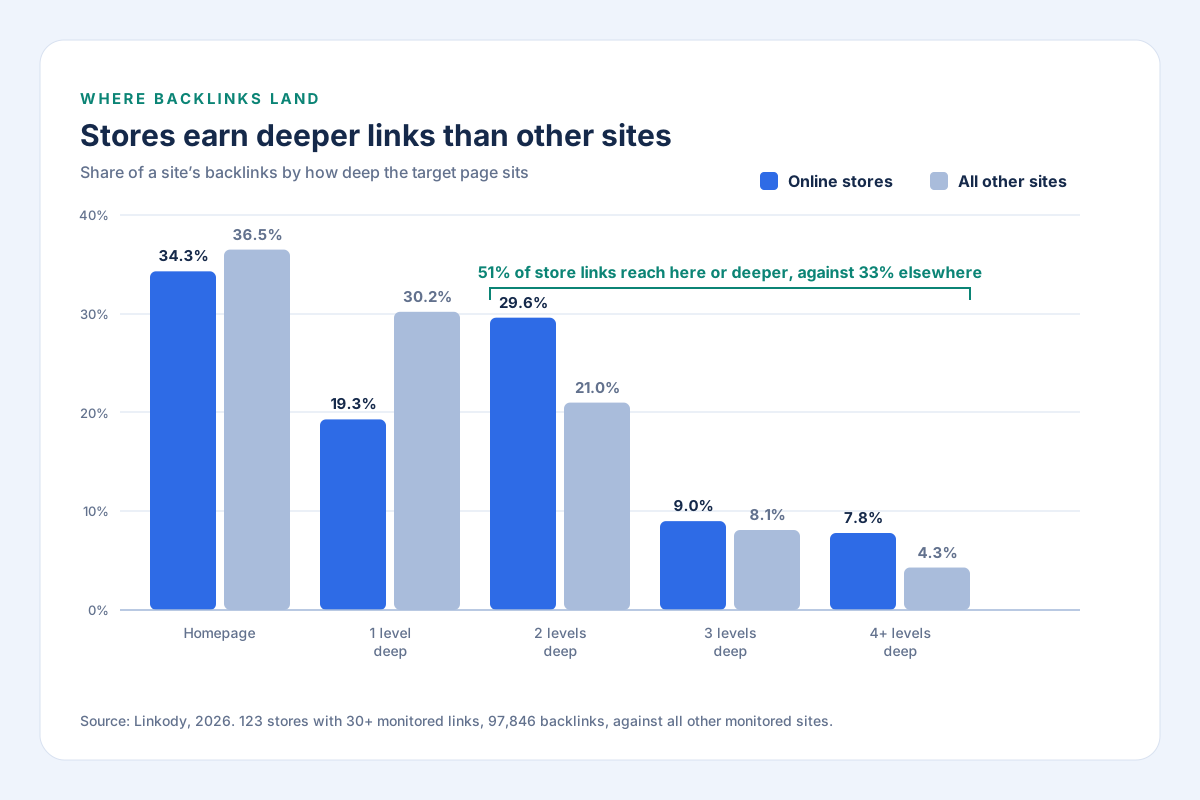
This is the genuinely surprising bit. Deep links to shops are supposed to be nearly impossible to earn. In our data they happen more often than on any other kind of site.
Two caveats. We classify a store by the pages it tracks, so a site with a small shop section counts. And depth only tells us roughly what kind of page a link points at. Two levels down could be a collection. Three could be a single product.
So earning deep links is possible. What holds a store back is that a third of its link equity keeps arriving at the homepage. The homepage’s only job is to send visitors somewhere else.
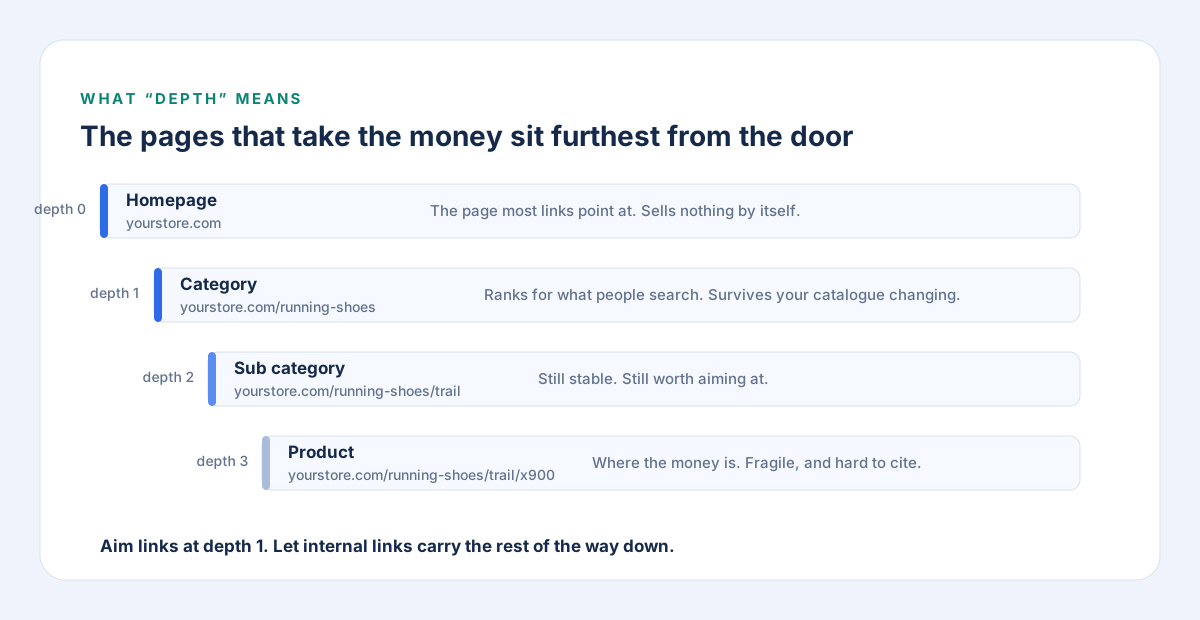
Aim at categories, not individual products
Most advice tells you to build links to product pages. It is the wrong target for three reasons.
Products get discontinued. Sizes sell out. A store that replatforms changes every product URL at once. Every link you earned points at a 404 or a redirect chain, and half of all backlinks are gone within a year even without that.
Category pages do not have that problem. “Running shoes” will still exist next year. It ranks for the term people actually search. It survives your catalogue changing underneath it. And whatever products are live at the time get the equity.
So when you pick a target, pick the category. Let internal links do the last step.
Four things that actually earn links for a shop
1. The guide next to the product
Nobody links to the tent you sell. People link to a guide on how to choose a tent for winter camping.
Sizing charts, care instructions, compatibility tables, buying guides. These are the linkable assets of ecommerce, and they sit one internal link away from the thing you sell.
Put them in the category, not on a separate blog nobody visits.
2. Being a stockist
If you resell brands, those brands often keep a “where to buy” page. Many of them link out.
It works more often than anything else on this list. You are already their customer, which is the whole reason it works. Ask the brand manager rather than the marketing team.
3. Roundups and gift guides
Somebody publishes “best waterproof jackets” every year and updates it every year. Those pages exist to list products, which makes them the one place a product link is natural.
Find the ones already listing your competitors. That is a competitor teardown, and it is the fastest way to a prospect list you can work through.
Seasonal ones have a deadline, which is useful. A gift guide writer in October wants suggestions.
4. Sending product to people who write
A reviewer with a small audience in your exact category is worth more than a big general site. They link to the product page because that is what they are reviewing.
This is one of the few ways a genuine product page link happens on its own. It costs you stock rather than budget. The outreach email is short too, because the offer is concrete.
Fix the homepage problem with internal links
A third of your links land on the homepage whatever you do. Press coverage, directories, partner pages, people who just cite the brand. You are not going to stop that.
So use the homepage to pass that value on.
Link from it to the categories you are actually trying to rank, using the words people search rather than the words your catalogue uses. If your category is called “outerwear” and the search is “winter coats”, your internal anchor text should say winter coats.
Most stores get this backwards. The homepage links to everything equally, which is the same as linking to nothing in particular.
What to watch once links start arriving
Three things to watch.
Where they point. If everything still lands on the homepage after six months of work, the work is not landing.
Whether they survive a catalogue change. This is the ecommerce specific one. After a replatform or a seasonal clearout, check which links now point at something that no longer exists, and redirect before you lose them.
Whether any of them are risky. Product directories and coupon sites will find you on their own. Some are fine. Some belong in a toxic backlink review.
The short version
Deep links to shops are not rare. Our data says stores earn them more often than other sites do, 51% against 33%.
What holds stores back is aiming at the wrong page. Individual products are fragile targets and hard to cite. Categories last, rank for real searches, and hand equity down to whatever is in stock.
Build the guide next to the category, get listed where your competitors already are, and let the homepage pass on what it collects.
So here is a question for your own store. Of the links you earned last year, how many still point at a page that exists?