
Most link building statistics posts say the same thing. They quote the same studies. They recycle numbers from 2019 and label them 2026.
We did something different. We went into Linkody’s own database.
Linkody monitors backlinks for a living. So we pulled the numbers from more than 865,000 real backlinks that our users actively track. Then we checked every finding against the best outside research we could verify.
This is what the data actually shows about backlinks in 2026. How they look. How they age. How many quietly die. And whether they still matter at all.
How we got these numbers. Linkody monitors millions of backlinks. For this study we used only the links where the data is clean and current. We left out competitor links (tracked for research, not owned), trial accounts, and churned users whose link status is frozen and out of date.
What remains is a sample of more than 865,000 backlinks across a broad range of websites and industries, each one checked continuously. Everything is aggregated and anonymized. Pulled June 2026. Outside data comes from more than 30 sources, each dated and linked.
Key Takeaways
- Only 56% of monitored backlinks are still live and correct.
- Half the links that die are gone within a year. Average lifespan is about 20 months.
- 77% of links are dofollow. Barely 1.6% use rel=sponsored or rel=ugc.
- 56% of anchors are keyword or phrase anchors. Just 18% are branded.
- Links from weak domains vanish fast. Two in three are already gone.
- Backlinks still sit inside Google’s ranking systems. But for AI search, brand mentions now matter more.
Do Backlinks Still Matter in 2026?
Ask Google and you get a mixed answer.
In 2023, Gary Illyes said backlinks are not a top three ranking factor (Search Engine Land, 2023). In 2024 he went further. We need very few links to rank a page, he told a conference (Search Engine Journal, Apr 2024). John Mueller has said their importance keeps fading.
So links are dead? Not so fast.
Two events tell a different story.
First, the 2024 Google API documentation leak. It exposed thousands of internal attributes. Several deal with links: source quality tiers, anchor spam signals, even a site authority feature Google had long denied (iPullRank, May 2024). We cannot see how much weight each one carries. The analysts who found them said the same. But the fields are real.
Second, the US antitrust trial. Under oath, Google staff described PageRank as a live signal that still feeds page quality. Anchors and clicks sit in the core too. This is sworn testimony, not a leak. It is the strongest confirmation we have.
Here is the honest read. Google plays down link volume in public. Its own systems still run on links. Both things are true at once.
What changed is the bar. Volume is out. Quality, relevance, and a clean link profile are in. That is the thread running through every number below.
The old correlation studies still get quoted. Backlinko found the top result has 3.8 times more backlinks than the rest. That data is from 2020, so treat it as a long standing baseline, not fresh proof.
The Anatomy of a Backlink
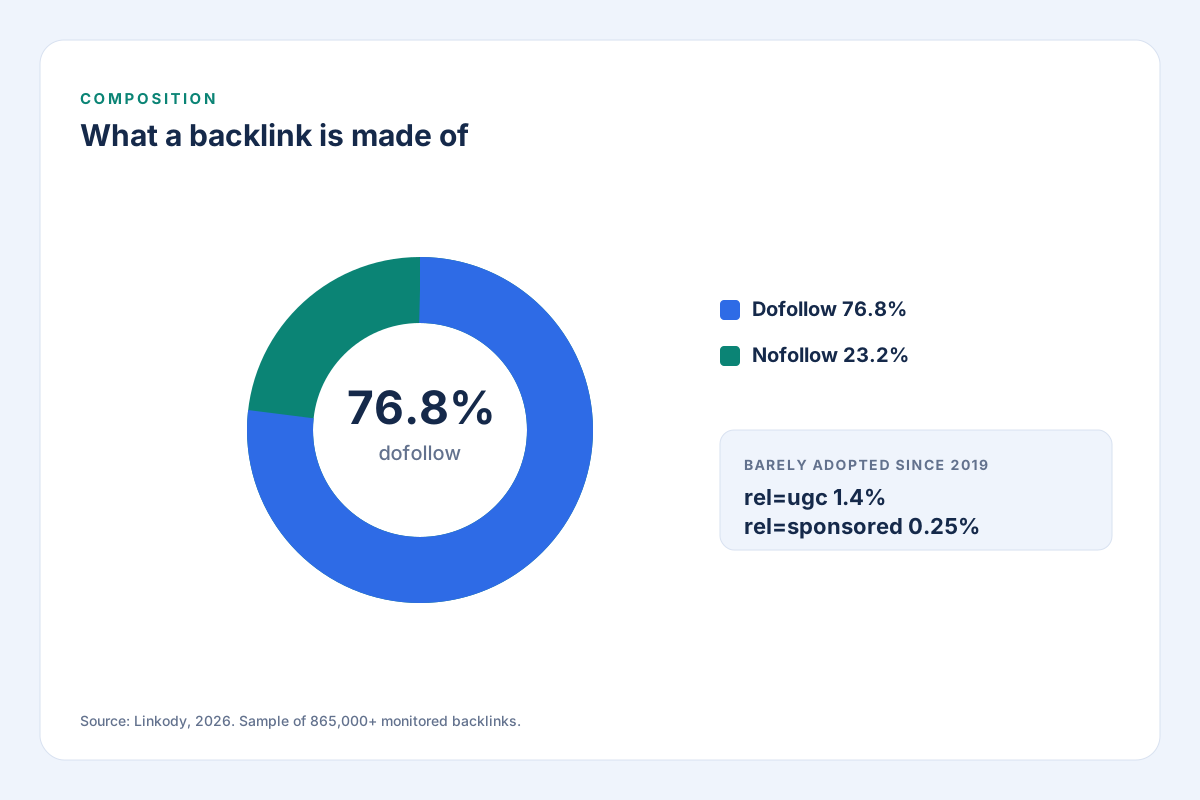
Before we ask whether links last or rank, look at what they actually are.
Most backlinks still pass authority. In our sample, 77% are dofollow. The other 23% are nofollow. So the classic dofollow link is far from dead.
The surprise is what is missing. Google launched rel=sponsored and rel=ugc back in 2019. They were meant to label paid links and links inside user content. Years later, almost nobody uses them. Just 1.4% of our links carry rel=ugc. Only 0.25% use rel=sponsored.
Read that again. After more than six years, fewer than 2 in 100 links use the tags Google asked for.
Type tells a similar story. The web still runs on text. 96% of backlinks are plain text links. Only about 4% are images.
The takeaway is simple. The backlink has barely changed shape. A text anchor with a dofollow tag is still the default unit of link building.
Anchor Text in the Wild
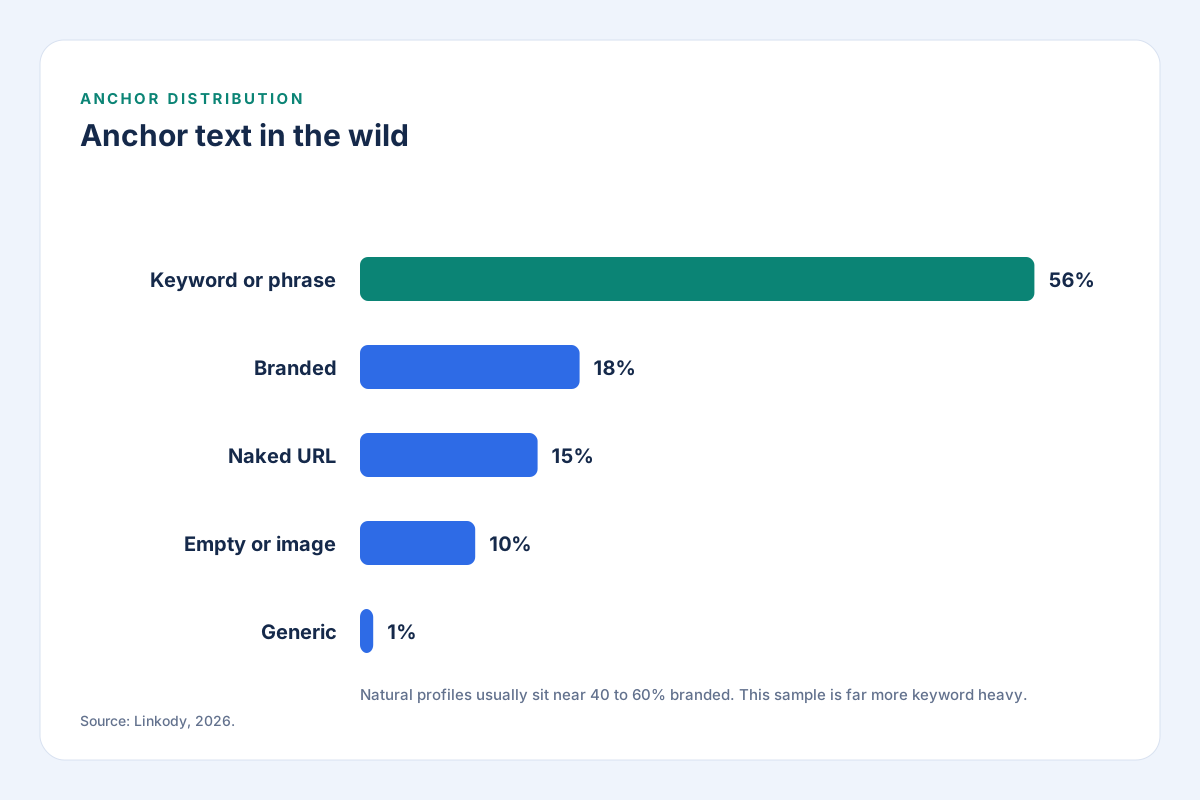
Anchor text is where link building gets risky. Use the right words and you help readers. Lean too hard on your keywords and you wave a flag at Google.
So what do real anchors look like? We sorted our sample into types.
- Keyword or phrase anchors: 56%
- Branded anchors: 18%
- Naked URLs: 15%
- Empty or image links: 10%
- Generic text like “click here”: 1%
One number stands out. 56% of anchors are keyword or phrase anchors. That is high.
A natural profile usually leans the other way. Practitioner guides put branded anchors around 40% to 60% and keep exact match anchors low, often under 10% (FATJOE, 2026). Our sample flips that. Branded sits at just 18%.
Why the gap? Because these are monitored links. People watch the links they worked to get. Built links carry more keywords than links earned by chance.
We will be honest about one limit. Our keyword bucket mixes exact match and partial match. We cannot split them cleanly. So read 56% as keyword leaning, not 56% exact match.
Still, the signal is clear. The links SEOs track are more keyword heavy than a natural profile. That is the kind of pattern Google has demoted since the Penguin update in 2012 (GSQI).
Only 56% of Backlinks Are Still Live
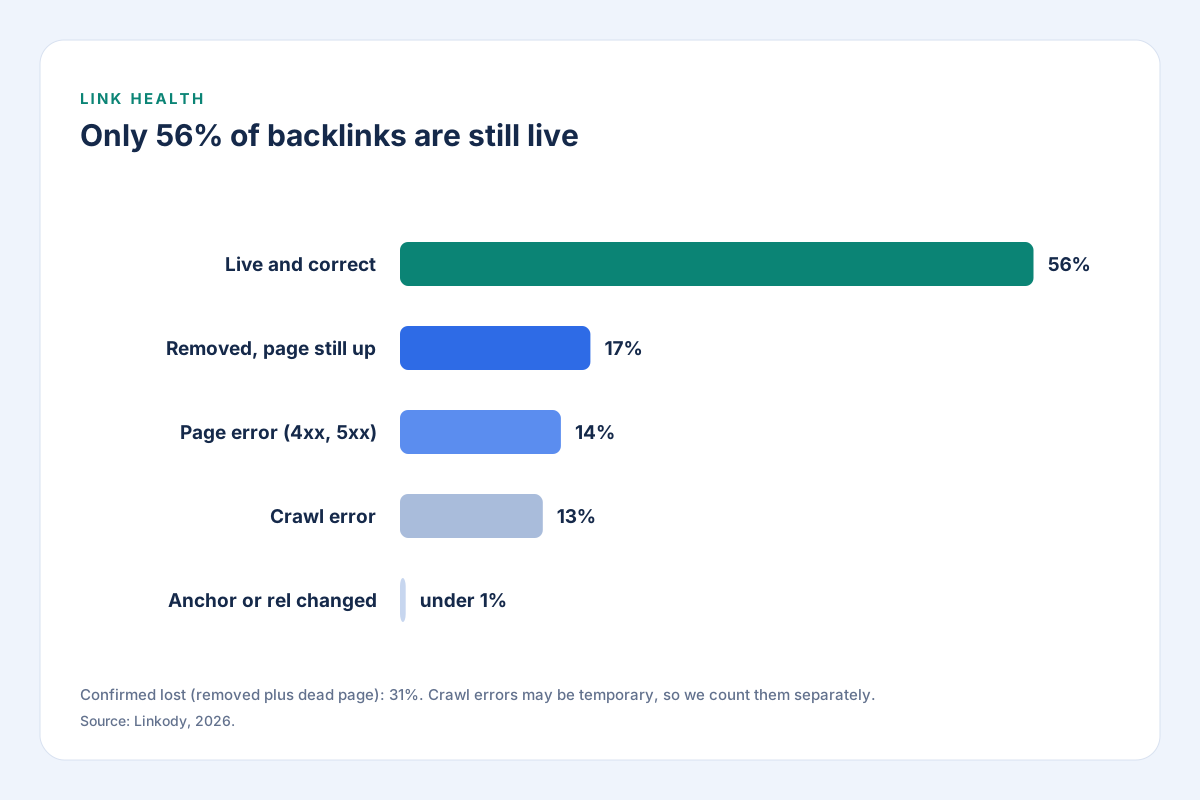
Now the finding that should change how you work. Most backlinks do not stay healthy.
In our sample, only 56% of monitored backlinks are still live and correct. The rest have a problem.
- Live and correct: 56%
- Removed, page still up: 17%
- Page returns an error: 14%
- Crawl error: 13%
- Anchor or rel changed: under 1%
Two failures dominate. Either the page dies, or the link gets pulled while the page lives on. Together that is almost a third of all links, broken or gone.
We are being careful here. The crawl errors, about 13%, are murky. Some are dead links. Some are just our crawler getting blocked or timing out. So we count only removed links and dead pages as confirmed losses. That floor is 31%.
The honest headline: roughly 1 in 3 backlinks you built is no longer the link you think it is. And you would never know without checking.
How Long Backlinks Last
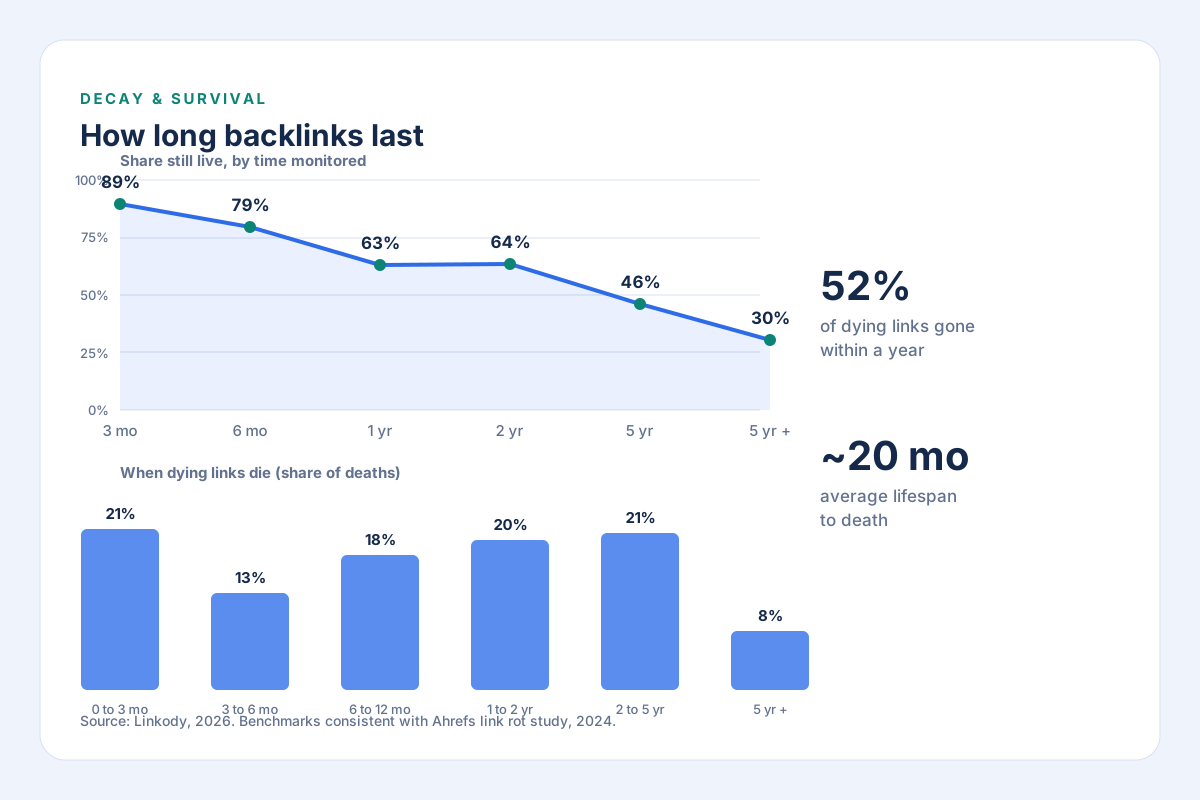
If links break, the next question is when. So we tracked the moment each link first went bad. We know the date a link was added and the date it failed. The gap is its lifespan.
The pattern is harsh. Links die young.
Of the links that died:
- 21% were gone within 3 months
- 34% within 6 months
- 52% within a year
Half of all dying links do not survive twelve months. The average lifespan to death is about 20 months.
Flip it to survival and the story holds. Group links by how long we have watched them:
- After 3 months, 89% are still live
- After a year, around 63%
- After 2 to 5 years, 46%
- After 5 years or more, just 31%
A backlink is not a monument. It has a shelf life.
This lines up with the largest outside study. Ahrefs looked at more than 2 million sites and found about half of all links are lost within seven years, with the heaviest losses early (Ahrefs, 2024). Our curve sits right inside theirs. The difference is we can show it month by month.
One caveat. Our clock starts when a link enters Linkody, not when it was first published. And we count only confirmed deaths. So real decay runs a little higher, not lower.
Why the Average Describes Almost Nobody
Added August 2026.
Every number above treats links as one big pile. We went back and grouped them by account instead. The picture changed.
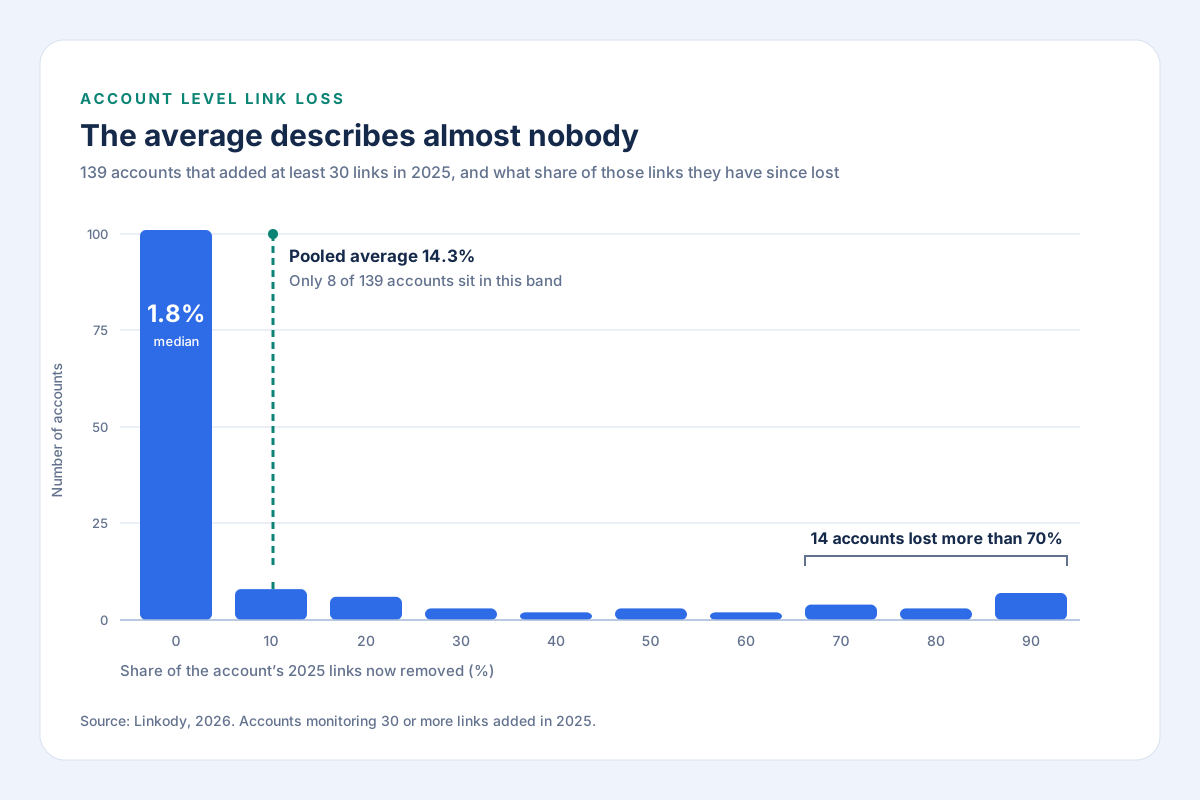
Take every account that added at least 30 links in 2025. That is 139 accounts and 234,138 links. Pool them together and 14.3% of those links have since been removed.
Now look at the accounts one at a time. The median account lost 1.8%.
The average is nearly eight times the typical experience. Here is how the 139 accounts actually split:
- 73% of accounts lost less than 10% of their links
- 10% of accounts lost more than 70%
- 17% sat anywhere in between
Loss clusters at the two ends. Most people barely lose anything. A small group loses almost everything. The steady middling decay that an average implies is the rarest outcome of the three.
We tested it four ways before believing it.
The split holds whether we count accounts with 10 links or 100. It holds in every year from 2021 to 2025, with 80% to 86% of accounts at the extremes each time. It holds for accounts that show up in only one year, so it is not a handful of heavy users repeating.
And the big losses are not one website going down. We checked the linking domains. One account lost 1,695 links spread across 1,695 separate domains. Across the whole losing group, the single worst domain accounted for between 0.1% and 12% of what they lost. These are broad losses, not one publisher clearing house.
So what separates the two groups?
The obvious answer is that they bought from different places. One person’s supplier keeps its sites up for years. Another’s sells placements that get cleared out in months. That would produce exactly this split.
We cannot prove it, and it is worth being straight about why. We record where a link is, not who sold it. There is no supplier field in our data, so we cannot line one vendor up against another.
What it means in practice: budget from your own live rate, not from an industry average, and track that rate per supplier if you buy links. If you are in the safe group, replacement planning built on a 14% figure will have you buying links you do not need. If you are in the losing group, you already have a bigger problem than a budget line.
Authority and Survival: Quality Pays
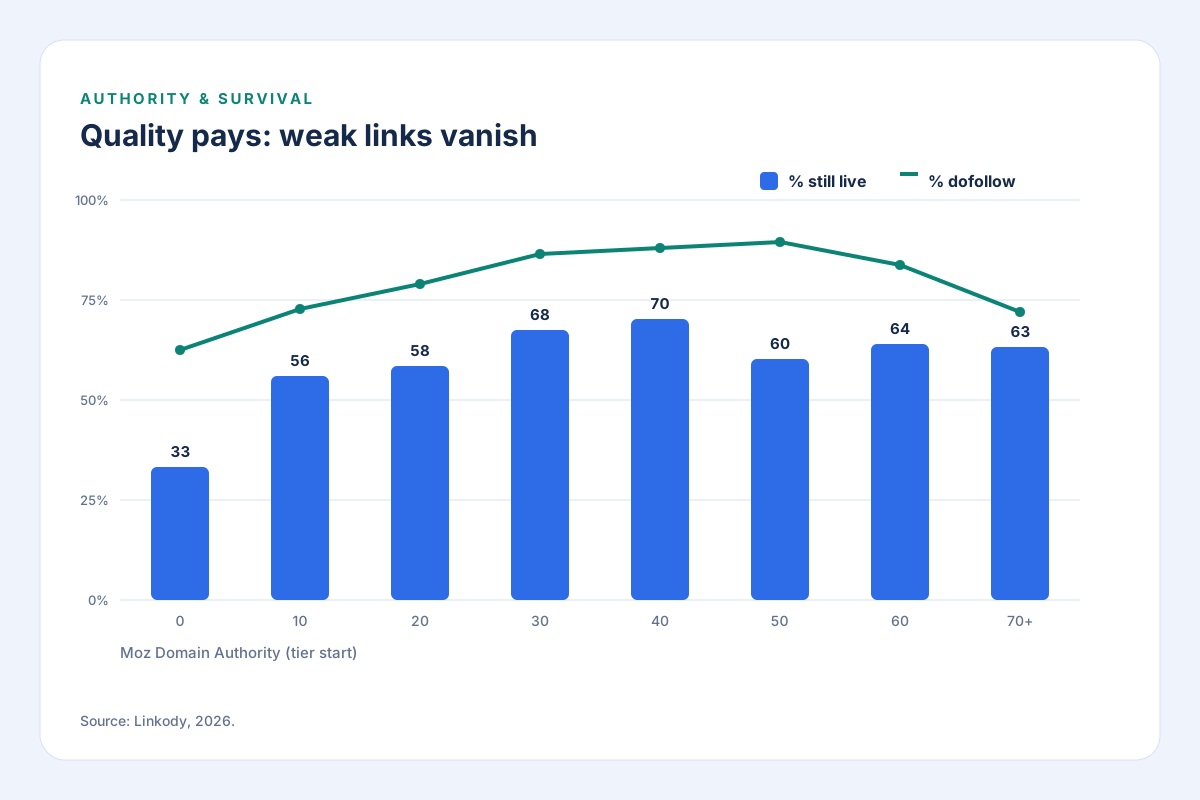
Not all links rot at the same rate. Authority is the difference.
We grouped links by the domain authority of the site they sit on (Moz DA). Then we checked how many were still live.
- Sites under DA 10: only 33% of links still live
- DA 30 to 49: about 70% still live
Links on weak domains vanish. Two out of three are already gone. Links on mid authority sites last more than twice as well.
It makes sense. Low authority domains are often thin, cheap, or short lived. They get abandoned. The page disappears, and your link with it.
Dofollow rates follow the same logic, with a twist. The share of dofollow links climbs as authority rises, from 63% on weak sites to nearly 90% in the mid range. Then it dips at the very top. The DA 70 and above group is back near 72% dofollow.
Why? The biggest sites are news outlets, universities, and government pages. They link out carefully, and they nofollow more often. So the most valuable links are also the hardest to win as dofollow.
The lesson runs through the whole study. A link from a strong, relevant site is worth chasing. It ranks better, and it lasts. A link from a weak site may be gone before it ever helped.
The Risk Side: Bad Links Now Fail Quietly
Link building has a dark side. Paid links, link networks, spammy anchors. The old fear was a penalty. A manual action in Search Console, a visible drop, a painful cleanup.
That fear is outdated. The risk today is quieter.
Since 2022, Google’s SpamBrain system does not just catch bought links. It neutralizes them. The links simply stop passing value (Google, Dec 2022). No warning. No message. The link still sits on the page, doing nothing.
Google kept tightening this through 2024 and 2025. More sites lost rankings with no manual action shown at all (iMark, 2025).
So the math on paid links has changed. You can still pay. You just cannot count on the link to work. And nobody tells you when it stops.
This is where monitoring earns its keep. If a link turns nofollow, drops off the page, or lands on a dead site, you want to know. Otherwise you are paying for ghosts.
What about disavow, the old cleanup tool? Our data says most people have moved on. Only about 9% of active sites in our sample have a single disavow rule. And when people do disavow, they swing hard. 80% of disavow rules target a whole domain, not one URL. It is a blunt instrument, used rarely.
One more pattern. About 1 in 10 of the links we monitor has a cost attached. Plenty of SEOs still pay for links, and they track the spend.
Links in the AI Search Era
Search is not just ten blue links anymore. People ask ChatGPT, Perplexity, and Google’s AI Overviews. So a fair question: do backlinks even matter for AI answers?
The data says yes, but less than you think. And something else matters more.
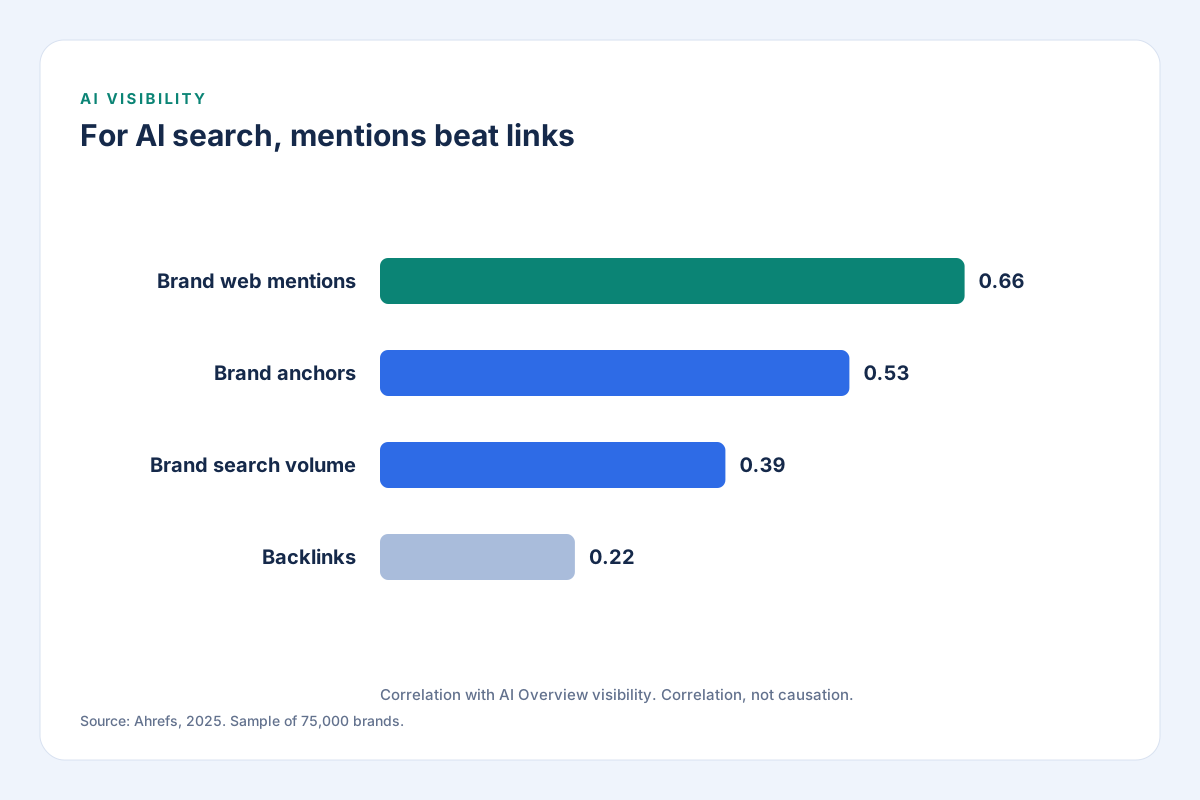
Ahrefs studied 75,000 brands and what drives visibility in AI Overviews. Backlinks showed only a weak tie, a correlation of 0.22. Brand mentions across the web showed a much stronger one, 0.66 (Ahrefs, May 2025). In plain terms, being talked about beats being linked to.
Other work points the same way. SALT.agency tested several AI engines and found backlinks correlate only moderately with AI visibility, around 0.39 to 0.42 (SALT.agency, Dec 2025). Useful, but not the whole game.
The ground is shifting fast too. In mid 2025, about 76% of AI Overview citations came from pages in the top ten results. By 2026 that had fallen to 38% (Ahrefs). AI engines are reaching past the first page for sources.
A caveat we owe you. These are correlations, not proof of cause. And the two AI Overview studies used different methods, so treat the drop as a direction, not an exact figure.
Here is the read. Links still help AI engines find and trust you. But mentions, citations, and a known brand now carry more weight. To track where your brand shows up in AI answers, we wrote a full guide to AI citation tracking.
How People Actually Build Links in 2026
So where do links come from now? The outside surveys are clear, and they disagree in an interesting way.
Digital PR is the tactic pros rate most effective. In a 2026 survey of 518 professionals, 48.6% named it the top performer. Guest posting trailed at 16% (Editorial.link, Mar 2026).
But effective and popular are not the same. Guest posting is still the most used tactic by far. People do what they know, even when they rate something else higher.
On timing, link building is faster than its reputation. 57% of pros expect results within one to three months (Editorial.link, Mar 2026).
Pricing is where it gets sobering. A 2026 analysis of a large vendor database put guest posts around $300 to $460 each, and digital PR links at $1,250 to $1,500. Worse, only 1.37% of vendor sites met a basic quality bar of real authority and traffic (BuzzStream, Jun 2026).
Read that last number twice. Fewer than 2 in 100 sites selling links are worth buying from. Which brings us back to the theme of this whole study. Quality is rare, and quality is what lasts.
Link Building in 2026, by the Numbers
If you remember nothing else, remember these.
| Stat | Figure | Source |
|---|---|---|
| Backlinks still live and correct | 56% | Linkody, 2026 |
| Confirmed lost or broken | 31% | Linkody, 2026 |
| Dying links gone within a year | 52% | Linkody, 2026 |
| Dofollow share | 77% | Linkody, 2026 |
| Links using rel=sponsored or ugc | under 2% | Linkody, 2026 |
| Keyword or phrase anchors | 56% | Linkody, 2026 |
| Still live after 5 years | 31% | Linkody, 2026 |
| Live rate, sites under DA 10 | 33% | Linkody, 2026 |
| Brand mentions vs backlinks, AI Overviews | 0.66 vs 0.22 | Ahrefs, 2025 |
| Digital PR rated most effective | 48.6% | Editorial.link, 2026 |
| Vendor sites meeting a quality bar | 1.37% | BuzzStream, 2026 |
Frequently Asked Questions
Do backlinks still matter in 2026?
Yes. Google plays down their weight in public. But sworn antitrust testimony and the 2024 API leak both show links, anchors, and PageRank still sit inside the ranking systems. Volume matters less. Quality and relevance matter more.
How long does a backlink last?
Not as long as you would hope. In our data, half of the links that die are gone within a year. After five years, only about 31% are still live and correct.
What share of backlinks are dofollow?
About 77% in our sample. Roughly 23% are nofollow. The rel=sponsored and rel=ugc tags stay rare, on under 2% of links.
Are nofollow links worth anything?
Yes. They send traffic, build brand, and look natural in a profile. And for AI search, mentions may matter more than the link type at all.
How much do backlinks cost?
External 2026 data puts guest posts around $300 to $460, and digital PR links above $1,200. But quality is rare. Fewer than 2 in 100 vendor sites meet a basic quality bar.
Should I still disavow links?
Usually no. Google now neutralizes most bad links on its own. In our data, only about 9% of active sites disavow at all. Save it for clear cases of paid or spammy links you control.
What This Means for Your Links
Put it all together and a clear message appears.
Link building is no longer just building. It is keeping.
You can earn a great link today and lose it within a year. Almost half of monitored links are already broken, removed, or pointing at dead pages. The web does not hold still.
So the winning approach in 2026 looks like this. Chase fewer, stronger links. Favor relevant, high authority sites, because those links last and carry weight. Watch your anchors, so your profile does not drift into keyword heavy territory. And check your links often, because the ones you cannot see failing are the ones quietly costing you.
That last part is the whole reason this data exists. Linkody monitors backlinks so you find out the moment one breaks, drops, or turns nofollow. You built those links. It is worth knowing they are still there.
So here is the real question. When did you last check your backlinks?